Filters
Question type

Study Flashcards

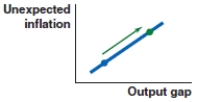
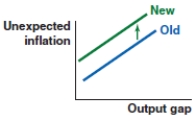
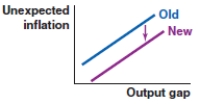
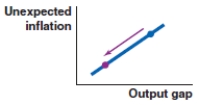
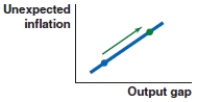
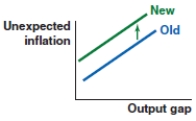
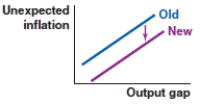
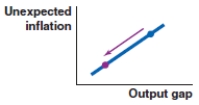
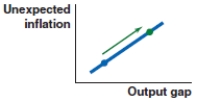
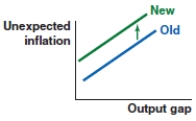
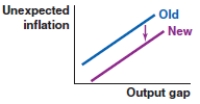
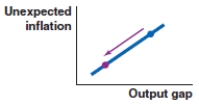
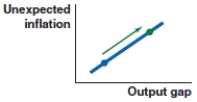
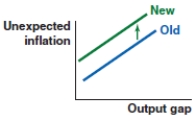
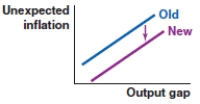
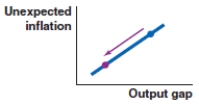
Suppose the Kenyan markets are experiencing insufficient demand. Which figure shows the effect on the Phillips curve in Kenya?


A)
Suppose the Kenyan markets are experiencing insufficient demand. Which figure shows the effect on the Phillips curve in Kenya? A)    B)    C)    D)
B)
Suppose the Kenyan markets are experiencing insufficient demand. Which figure shows the effect on the Phillips curve in Kenya? A)    B)    C)    D)
C)
Suppose the Kenyan markets are experiencing insufficient demand. Which figure shows the effect on the Phillips curve in Kenya? A)    B)    C)    D)
D)
Suppose the Kenyan markets are experiencing insufficient demand. Which figure shows the effect on the Phillips curve in Kenya? A)    B)    C)    D)

E) B) and D)
F) B) and C)

Correct Answer

verifed

verified

Suppose that in a given country, the line of best fit approximates the Phillips curve shown here. Next year, you expect GDP to be 3% above potential GDP. Current inflation expectations are at 2%. How much does your salary have to change, in nominal terms, in order to maintain your purchasing power? Suppose that in a given country, the line of best fit approximates the Phillips curve shown here. Next year, you expect GDP to be 3% above potential GDP. Current inflation expectations are at 2%. How much does your salary have to change, in nominal terms, in order to maintain your purchasing power?   A) 3% B) 2% C) 1% D) 4%


A) 3%
B) 2%
C) 1%
D) 4%

E) A) and D)
F) B) and C)

Correct Answer

verifed

verified

Consider the Phillips curve shown here. In region B: Consider the Phillips curve shown here. In region B:   A) there is excess demand. B) inflation falls below expected inflation. C) there is insufficient demand. D) the output gap is negative.


A) there is excess demand.
B) inflation falls below expected inflation.
C) there is insufficient demand.
D) the output gap is negative.

E) None of the above
F) All of the above

Correct Answer

verifed

verified

What is excess demand?


A) too many buyers for too few goods
B) too much supply for too few buyers
C) fast-changing consumer preferences
D) higher equilibrium quantity

E) None of the above
F) A) and D)

Correct Answer

verifed

verified

If expected inflation is 1.75% and actual inflation is 2.30%, then unexpected inflation is:


A) 4.05%.
B) 2.30%.
C) 1.75%.
D) 0.55%.

E) C) and D)
F) B) and C)

Correct Answer

verifed

verified

Excess demand occurs when:


A) there is a surplus in the market.
B) supply is in excess of demand at the market price.
C) demand is in excess of supply at the market price.
D) demand and supply are equal at the market price.

E) All of the above
F) B) and D)

Correct Answer

verifed

verified

What is insufficient demand?


A) too many buyers for too few goods
B) too much supply for too few buyers
C) slow-changing consumer preferences
D) lower equilibrium quantity

E) A) and D)
F) All of the above

Correct Answer

verifed

verified

Why do the unexpected inflation and output gap axes need to extend into the negative regions in the Phillips curve diagram?


A) Both output gaps and unexpected inflation can be negative or positive.
B) Both output gaps and unexpected inflation always begin by being negative.
C) Negative inflation gaps are very common.
D) Negative output gaps are very common.

E) A) and D)
F) B) and C)

Correct Answer

verifed

verified

An increase in unexpected inflation is seen graphically as _____ the labor market Phillips curve.


A) a movement to the left along
B) a movement to the right along
C) a left shift of
D) a right shift of

E) A) and D)
F) B) and C)

Correct Answer

verifed

verified

Suppose that the euro depreciates. Which figure shows the effect on the Phillips curve in Germany?


A)
Suppose that the euro depreciates. Which figure shows the effect on the Phillips curve in Germany? A)    B)    C)    D)
B)
Suppose that the euro depreciates. Which figure shows the effect on the Phillips curve in Germany? A)    B)    C)    D)
C)
Suppose that the euro depreciates. Which figure shows the effect on the Phillips curve in Germany? A)    B)    C)    D)
D)
Suppose that the euro depreciates. Which figure shows the effect on the Phillips curve in Germany? A)    B)    C)    D)

E) B) and C)
F) A) and D)

Correct Answer

verifed

verified

Suppose that the Indian rupee loses value against the U.S. dollar. Which figure shows the effect on the Phillips curve in India?


A)
Suppose that the Indian rupee loses value against the U.S. dollar. Which figure shows the effect on the Phillips curve in India? A)    B)    C)    D)
B)
Suppose that the Indian rupee loses value against the U.S. dollar. Which figure shows the effect on the Phillips curve in India? A)    B)    C)    D)
C)
Suppose that the Indian rupee loses value against the U.S. dollar. Which figure shows the effect on the Phillips curve in India? A)    B)    C)    D)
D)
Suppose that the Indian rupee loses value against the U.S. dollar. Which figure shows the effect on the Phillips curve in India? A)    B)    C)    D)

E) A) and B)
F) A) and C)

Correct Answer

verifed

verified

Insufficient demand occurs when:


A) there is a shortage in the market.
B) supply is in excess of demand at the market price.
C) demand is in excess of supply at the market price.
D) demand and supply are equal at the market price.

E) A) and B)
F) A) and D)

Correct Answer

verifed

verified

Which figure shows the correct effect on the Phillips curve when the domestic currency depreciates?


A)
Which figure shows the correct effect on the Phillips curve when the domestic currency depreciates? A)    B)    C)    D)
B)
Which figure shows the correct effect on the Phillips curve when the domestic currency depreciates? A)    B)    C)    D)
C)
Which figure shows the correct effect on the Phillips curve when the domestic currency depreciates? A)    B)    C)    D)
D)
Which figure shows the correct effect on the Phillips curve when the domestic currency depreciates? A)    B)    C)    D)

E) A) and B)
F) A) and C)

Correct Answer

verifed

verified

Insufficient demand leads to a:


A) surplus and falling prices.
B) shortage and falling prices.
C) shortage and rising prices.
D) surplus and rising prices.

E) A) and B)
F) A) and C)

Correct Answer

verifed

verified

When the output gap becomes more positive:


A) prices fall due to surpluses.
B) demand-pull inflation rises.
C) unemployment rises.
D) negative supply shocks come about.

E) B) and C)
F) A) and D)

Correct Answer

verifed

verified

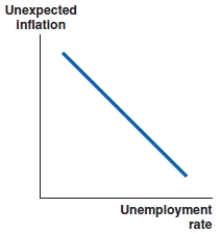
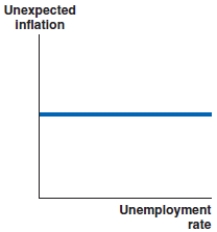
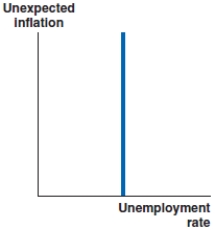
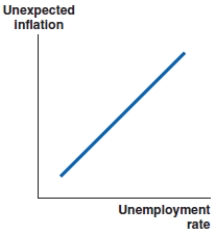
Which of the graphs shows the correct shape of the labor market Phillips curve?


A)
Which of the graphs shows the correct shape of the labor market Phillips curve? A)    B)    C)    D)
B)
Which of the graphs shows the correct shape of the labor market Phillips curve? A)    B)    C)    D)
C)
Which of the graphs shows the correct shape of the labor market Phillips curve? A)    B)    C)    D)
D)
Which of the graphs shows the correct shape of the labor market Phillips curve? A)    B)    C)    D)

E) B) and C)
F) A) and C)

Correct Answer

verifed

verified

If managers expect inflation to approach the Federal Reserve's target, they have _____ expectations.


A) adaptive
B) anchored
C) zero
D) rational

E) A) and D)
F) A) and C)

Correct Answer

verifed

verified

Consider the labor market Phillips curve. A negative supply shock will cause _____ the labor market Phillips curve.


A) a movement to the left along
B) a movement to the right along
C) a left shift of
D) a right shift of

E) B) and C)
F) All of the above

Correct Answer

verifed

verified

Forecasts expect inflation to be 2%. Actual inflation ends up being 1.75%. Holding all else equal, if there is no supply-side change in the economy, these statistics indicate inflation is ____ less than expected.


A) 3.75%
B) 0.25%
C) 1.75%
D) 2.0%

E) None of the above
F) All of the above

Correct Answer

verifed

verified

The Treasury inflation-protected security (TIPS) is a bond with a principal value that fluctuates relative to changes in the consumer price index. The interest on the bond is calculated on the adjusted principal. This instrument has an advantage over a regular bond because it:


A) has a real return that is zero.
B) protects the saver against inflation.
C) has a return that matches the economic growth rate.
D) protects the saver against supply-side shocks.

E) C) and D)
F) All of the above

Correct Answer

verifed

verified

Showing 21 - 40 of 131

Related Exams

Show Answer