Filters
Question type

Study Flashcards

The equilibrium constant, Kp, has a value of 6.5 × 10⁻⁴ at 308 K for the reaction of nitrogen monoxide with chlorine. 2NO(g) + Cl2(g) The equilibrium constant, K<sub>p</sub>, has a value of 6.5 × 10<sup>-4</sup> at 308 K for the reaction of nitrogen monoxide with chlorine. 2NO(g)  + Cl<sub>2</sub>(g)    2NOCl(g)  What is the value of K<sub>c</sub>? A)  2.5 × 10<sup>-7</sup> B)  6.5 × 10<sup>-4</sup> C)  1.6 × 10<sup>-2</sup> D)  1.7 E)  None of these choices are correct. 2NOCl(g) What is the value of Kc?


A) 2.5 × 10⁻⁷
B) 6.5 × 10⁻⁴
C) 1.6 × 10⁻²
D) 1.7
E) None of these choices are correct.

F) C) and D)
G) B) and E)

Correct Answer

verifed

verified

The reaction system POCl3(g) The reaction system POCl<sub>3</sub>(g)    POCl(g)  + Cl<sub>2</sub>(g)  Is at equilibrium. Which of the following statements describes the behavior of the system if the partial pressure of chlorine is reduced by 50%? A)  POCl<sub>3</sub> will be consumed as equilibrium is established. B)  POCl will be consumed as equilibrium is established. C)  Chlorine will be consumed as equilibrium is established. D)  The partial pressure of POCl will decrease while the partial pressure of Cl<sub>2</sub> increases as equilibrium is established. E)  The volume will have to decrease before equilibrium can be reestablished. POCl(g) + Cl2(g) Is at equilibrium. Which of the following statements describes the behavior of the system if the partial pressure of chlorine is reduced by 50%?


A) POCl3 will be consumed as equilibrium is established.
B) POCl will be consumed as equilibrium is established.
C) Chlorine will be consumed as equilibrium is established.
D) The partial pressure of POCl will decrease while the partial pressure of Cl2 increases as equilibrium is established.
E) The volume will have to decrease before equilibrium can be reestablished.

F) A) and D)
G) B) and E)

Correct Answer

verifed

verified

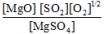
Write the mass-action expression, Write the mass-action expression,   c, for the following chemical reaction. MgO(s)  + SO<sub>2</sub>(g)  + ½O<sub>2</sub>(g)    MgSO<sub>4</sub>(s)  A)    B)    C)    D)    E)  None of these choices are correct. c, for the following chemical reaction. MgO(s) + SO2(g) + ½O2(g) Write the mass-action expression,   c, for the following chemical reaction. MgO(s)  + SO<sub>2</sub>(g)  + ½O<sub>2</sub>(g)    MgSO<sub>4</sub>(s)  A)    B)    C)    D)    E)  None of these choices are correct. MgSO4(s)


A) Write the mass-action expression,   c, for the following chemical reaction. MgO(s)  + SO<sub>2</sub>(g)  + ½O<sub>2</sub>(g)    MgSO<sub>4</sub>(s)  A)    B)    C)    D)    E)  None of these choices are correct.
B) Write the mass-action expression,   c, for the following chemical reaction. MgO(s)  + SO<sub>2</sub>(g)  + ½O<sub>2</sub>(g)    MgSO<sub>4</sub>(s)  A)    B)    C)    D)    E)  None of these choices are correct.
C) Write the mass-action expression,   c, for the following chemical reaction. MgO(s)  + SO<sub>2</sub>(g)  + ½O<sub>2</sub>(g)    MgSO<sub>4</sub>(s)  A)    B)    C)    D)    E)  None of these choices are correct.
D) Write the mass-action expression,   c, for the following chemical reaction. MgO(s)  + SO<sub>2</sub>(g)  + ½O<sub>2</sub>(g)    MgSO<sub>4</sub>(s)  A)    B)    C)    D)    E)  None of these choices are correct.
E) None of these choices are correct.

F) B) and D)
G) A) and C)

Correct Answer

verifed

verified

What is the mass-action expression, p, for the following reaction? SbF5(g) + 4Cl2(g) What is the mass-action expression, p, for the following reaction? SbF<sub>5</sub>(g)  + 4Cl<sub>2</sub>(g)    SbCl<sub>3</sub>(g)  + 5ClF(g)  A)    B)    C)    D)    E)  None of these choices are correct. SbCl3(g) + 5ClF(g)


A) What is the mass-action expression, p, for the following reaction? SbF<sub>5</sub>(g)  + 4Cl<sub>2</sub>(g)    SbCl<sub>3</sub>(g)  + 5ClF(g)  A)    B)    C)    D)    E)  None of these choices are correct.
B) What is the mass-action expression, p, for the following reaction? SbF<sub>5</sub>(g)  + 4Cl<sub>2</sub>(g)    SbCl<sub>3</sub>(g)  + 5ClF(g)  A)    B)    C)    D)    E)  None of these choices are correct.
C) What is the mass-action expression, p, for the following reaction? SbF<sub>5</sub>(g)  + 4Cl<sub>2</sub>(g)    SbCl<sub>3</sub>(g)  + 5ClF(g)  A)    B)    C)    D)    E)  None of these choices are correct.
D) What is the mass-action expression, p, for the following reaction? SbF<sub>5</sub>(g)  + 4Cl<sub>2</sub>(g)    SbCl<sub>3</sub>(g)  + 5ClF(g)  A)    B)    C)    D)    E)  None of these choices are correct.
E) None of these choices are correct.

F) A) and D)
G) C) and E)

Correct Answer

verifed

verified

The equilibrium constant, Kc, for the decomposition of COBr2 COBr2(g) The equilibrium constant, K<sub>c</sub>, for the decomposition of COBr<sub>2</sub> COBr<sub>2</sub>(g)    CO(g)  + Br<sub>2</sub>(g)  Is 0.190. What is K<sub>c</sub> for the following reaction? 2CO(g)  + 2Br<sub>2</sub>(g)    2COBr<sub>2</sub>(g)  A)  0.0361 B)  2.63 C)  5.62 D)  10.5 E)  27.7 CO(g) + Br2(g) Is 0.190. What is Kc for the following reaction? 2CO(g) + 2Br2(g) The equilibrium constant, K<sub>c</sub>, for the decomposition of COBr<sub>2</sub> COBr<sub>2</sub>(g)    CO(g)  + Br<sub>2</sub>(g)  Is 0.190. What is K<sub>c</sub> for the following reaction? 2CO(g)  + 2Br<sub>2</sub>(g)    2COBr<sub>2</sub>(g)  A)  0.0361 B)  2.63 C)  5.62 D)  10.5 E)  27.7 2COBr2(g)


A) 0.0361
B) 2.63
C) 5.62
D) 10.5
E) 27.7

F) A) and D)
G) B) and E)

Correct Answer

verifed

verified

There is a direct correlation between the speed of a reaction and its equilibrium constant.

A) True
B) False

Correct Answer

verifed

verified

Hydrogen iodide, HI, is formed in an equilibrium reaction when gaseous hydrogen and iodine gas are heated together. If 20.0 g of hydrogen and 20.0 g of iodine are heated, forming 10.0 g of hydrogen iodide, what mass of hydrogen remains unreacted?


A) 10.0 g hydrogen remains
B) 10.9 g hydrogen remains
C) 15.0 g hydrogen remains
D) 19.9 g hydrogen remains
E) Need to know the equilibrium constant in order to calculate the answer.

F) B) and E)
G) B) and D)

Correct Answer

verifed

verified

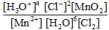
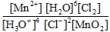
What is the mass-action expression, What is the mass-action expression,   c, for the following chemical reaction? 4H<sub>3</sub>O<sup>+</sup>(aq)  + 2Cl<sup>-</sup>(aq)  + MnO<sub>2</sub>(s)    Mn<sup>2+</sup>(aq)  + 6H<sub>2</sub>O(l)  + Cl<sub>2</sub>(g)  A)    B)    C)    D)    E)  None of these choices are correct. c, for the following chemical reaction? 4H3O+(aq) + 2Cl-(aq) + MnO2(s) What is the mass-action expression,   c, for the following chemical reaction? 4H<sub>3</sub>O<sup>+</sup>(aq)  + 2Cl<sup>-</sup>(aq)  + MnO<sub>2</sub>(s)    Mn<sup>2+</sup>(aq)  + 6H<sub>2</sub>O(l)  + Cl<sub>2</sub>(g)  A)    B)    C)    D)    E)  None of these choices are correct. Mn2+(aq) + 6H2O(l) + Cl2(g)


A) What is the mass-action expression,   c, for the following chemical reaction? 4H<sub>3</sub>O<sup>+</sup>(aq)  + 2Cl<sup>-</sup>(aq)  + MnO<sub>2</sub>(s)    Mn<sup>2+</sup>(aq)  + 6H<sub>2</sub>O(l)  + Cl<sub>2</sub>(g)  A)    B)    C)    D)    E)  None of these choices are correct.
B) What is the mass-action expression,   c, for the following chemical reaction? 4H<sub>3</sub>O<sup>+</sup>(aq)  + 2Cl<sup>-</sup>(aq)  + MnO<sub>2</sub>(s)    Mn<sup>2+</sup>(aq)  + 6H<sub>2</sub>O(l)  + Cl<sub>2</sub>(g)  A)    B)    C)    D)    E)  None of these choices are correct.
C) What is the mass-action expression,   c, for the following chemical reaction? 4H<sub>3</sub>O<sup>+</sup>(aq)  + 2Cl<sup>-</sup>(aq)  + MnO<sub>2</sub>(s)    Mn<sup>2+</sup>(aq)  + 6H<sub>2</sub>O(l)  + Cl<sub>2</sub>(g)  A)    B)    C)    D)    E)  None of these choices are correct.
D) What is the mass-action expression,   c, for the following chemical reaction? 4H<sub>3</sub>O<sup>+</sup>(aq)  + 2Cl<sup>-</sup>(aq)  + MnO<sub>2</sub>(s)    Mn<sup>2+</sup>(aq)  + 6H<sub>2</sub>O(l)  + Cl<sub>2</sub>(g)  A)    B)    C)    D)    E)  None of these choices are correct.
E) None of these choices are correct.

F) A) and B)
G) B) and E)

Correct Answer

verifed

verified

A mixture of 0.600 mol of bromine and 1.600 mol of iodine is placed into a rigid 1.000-L container at 350°C. Br2(g) + I2(g) A mixture of 0.600 mol of bromine and 1.600 mol of iodine is placed into a rigid 1.000-L container at 350°C. Br<sub>2</sub>(g)  + I<sub>2</sub>(g)    2IBr(g)  When the mixture has come to equilibrium, the concentration of iodine monobromide is 1.190 M. What is the equilibrium constant for this reaction at 350°C? A)  3.55 × 10<sup>-3</sup> B)  1.24 C)  1.47 D)  282 E)  325 2IBr(g) When the mixture has come to equilibrium, the concentration of iodine monobromide is 1.190 M. What is the equilibrium constant for this reaction at 350°C?


A) 3.55 × 10⁻³
B) 1.24
C) 1.47
D) 282
E) 325

F) All of the above
G) A) and D)

Correct Answer

verifed

verified

About half of the sodium carbonate produced is used in making glass products because it lowers the melting point of sand, the major component of glass. When sodium carbonate is added to water it hydrolyses according to the following reactions. CO32-(aq) + H2O(l) About half of the sodium carbonate produced is used in making glass products because it lowers the melting point of sand, the major component of glass. When sodium carbonate is added to water it hydrolyses according to the following reactions. CO<sub>3</sub><sup>2-</sup>(aq)  + H<sub>2</sub>O(l)    HCO<sub>3</sub><sup>-</sup>(aq)  + OH<sup>-</sup>(aq)  K<sub>1</sub> HCO<sub>3</sub>(aq)  + H<sub>2</sub>O(l)    H<sub>2</sub>CO<sub>3</sub>(aq)  + OH<sup>-</sup>(aq)  K<sub>2</sub> These can be combined to yield CO<sub>3</sub><sup>2-</sup>(aq)  + 2H<sub>2</sub>O(l)    H<sub>2</sub>CO<sub>3</sub>(aq)  + 2OH<sup>-</sup>(aq)  K<sub>3</sub> What is the value of K<sub>3</sub>? A)  K<sub>1</sub> × K<sub>2</sub> B)  K<sub>1</sub> ÷ K<sub>2</sub> C)  K<sub>1</sub> + K<sub>2</sub> D)  K<sub>1</sub> - K<sub>2</sub> E)  (K<sub>1</sub>K<sub>2</sub>) <sup>2</sup> HCO3-(aq) + OH-(aq) K1 HCO3(aq) + H2O(l) About half of the sodium carbonate produced is used in making glass products because it lowers the melting point of sand, the major component of glass. When sodium carbonate is added to water it hydrolyses according to the following reactions. CO<sub>3</sub><sup>2-</sup>(aq)  + H<sub>2</sub>O(l)    HCO<sub>3</sub><sup>-</sup>(aq)  + OH<sup>-</sup>(aq)  K<sub>1</sub> HCO<sub>3</sub>(aq)  + H<sub>2</sub>O(l)    H<sub>2</sub>CO<sub>3</sub>(aq)  + OH<sup>-</sup>(aq)  K<sub>2</sub> These can be combined to yield CO<sub>3</sub><sup>2-</sup>(aq)  + 2H<sub>2</sub>O(l)    H<sub>2</sub>CO<sub>3</sub>(aq)  + 2OH<sup>-</sup>(aq)  K<sub>3</sub> What is the value of K<sub>3</sub>? A)  K<sub>1</sub> × K<sub>2</sub> B)  K<sub>1</sub> ÷ K<sub>2</sub> C)  K<sub>1</sub> + K<sub>2</sub> D)  K<sub>1</sub> - K<sub>2</sub> E)  (K<sub>1</sub>K<sub>2</sub>) <sup>2</sup> H2CO3(aq) + OH-(aq) K2 These can be combined to yield CO32-(aq) + 2H2O(l) About half of the sodium carbonate produced is used in making glass products because it lowers the melting point of sand, the major component of glass. When sodium carbonate is added to water it hydrolyses according to the following reactions. CO<sub>3</sub><sup>2-</sup>(aq)  + H<sub>2</sub>O(l)    HCO<sub>3</sub><sup>-</sup>(aq)  + OH<sup>-</sup>(aq)  K<sub>1</sub> HCO<sub>3</sub>(aq)  + H<sub>2</sub>O(l)    H<sub>2</sub>CO<sub>3</sub>(aq)  + OH<sup>-</sup>(aq)  K<sub>2</sub> These can be combined to yield CO<sub>3</sub><sup>2-</sup>(aq)  + 2H<sub>2</sub>O(l)    H<sub>2</sub>CO<sub>3</sub>(aq)  + 2OH<sup>-</sup>(aq)  K<sub>3</sub> What is the value of K<sub>3</sub>? A)  K<sub>1</sub> × K<sub>2</sub> B)  K<sub>1</sub> ÷ K<sub>2</sub> C)  K<sub>1</sub> + K<sub>2</sub> D)  K<sub>1</sub> - K<sub>2</sub> E)  (K<sub>1</sub>K<sub>2</sub>) <sup>2</sup> H2CO3(aq) + 2OH-(aq) K3 What is the value of K3?


A) K1 × K2
B) K1 ÷ K2
C) K1 + K2
D) K1 - K2
E) (K1K2) 2

F) B) and C)
G) A) and D)

Correct Answer

verifed

verified

The following reaction, in CCl4 solvent, has been studied at 25°C. 2BrCl The following reaction, in CCl4 solvent, has been studied at 25°C. 2BrCl   Br<sub>2</sub> + Cl<sub>2</sub> The equilibrium constant Kc is known to be 0.141. If the initial concentration of chlorine is 0.0300 M and of bromine monochloride is 0.0200 M, what is the equilibrium concentration of bromine? A)  1.35 × 10<sup>-3</sup> M B)  2.70 × 10<sup>-3</sup> M C)  8.82 × 10<sup>-3</sup> M D)  9.70 × 10<sup>-2</sup> M E)  None of these choices are correct. Br2 + Cl2 The equilibrium constant Kc is known to be 0.141. If the initial concentration of chlorine is 0.0300 M and of bromine monochloride is 0.0200 M, what is the equilibrium concentration of bromine?


A) 1.35 × 10⁻³ M
B) 2.70 × 10⁻³ M
C) 8.82 × 10⁻³ M
D) 9.70 × 10⁻² M
E) None of these choices are correct.

F) B) and E)
G) C) and E)

Correct Answer

verifed

verified

The equilibrium constant Kc for the reaction PCl3(g) + Cl2(g) The equilibrium constant Kc for the reaction PCl<sub>3</sub>(g)  + Cl<sub>2</sub>(g)    PCl<sub>5</sub>(g)  Is 49 at 230°C. If 0.70 mol of PCl<sub>3</sub> is added to 0.70 mol of Cl<sub>2</sub> in a 1.00-L reaction vessel at 230°C, what is the concentration of PCl<sub>3</sub> when equilibrium has been established? A)  0.049 M B)  0.11 M C)  0.30 M D)  0.59 M E)  0.83 M PCl5(g) Is 49 at 230°C. If 0.70 mol of PCl3 is added to 0.70 mol of Cl2 in a 1.00-L reaction vessel at 230°C, what is the concentration of PCl3 when equilibrium has been established?


A) 0.049 M
B) 0.11 M
C) 0.30 M
D) 0.59 M
E) 0.83 M

F) A) and D)
G) A) and B)

Correct Answer

verifed

verified

SO2 reacts with O2 to produce SO3. If 86.0 g of SO2 is placed in a reaction vessel along with excess oxygen gas, how many moles of SO2 remain when 50.0 g of SO3 have been formed?


A) 0.56 mol
B) 0.62 mol
C) 0.72 mol
D) 0.78 mol
E) 1.34 mol

F) A) and E)
G) C) and E)

Correct Answer

verifed

verified

The reaction quotient for a gas phase reaction has a value of 2000. If the number of moles of reactants in the reaction equation is equal to that of the products, which of the following statements is definitely true?


A) The reaction must proceed to the left to establish equilibrium.
B) The reaction must proceed to the right to establish equilibrium.
C) When the system is at equilibrium, the concentrations of the products will be much larger than the concentrations of the reactants.
D) The concentrations of the products are generally larger than the concentrations of the reactants.
E) None of these choices are correct.

F) C) and E)
G) All of the above

Correct Answer

verifed

verified

Although a system may be at equilibrium, the rate constants of the forward and reverse reactions will in general be different.

A) True
B) False

Correct Answer

verifed

verified

Carbon monoxide and chlorine combine in an equilibrium reaction to produce the highly toxic product, phosgene (COCl2) CO(g) + Cl2(g) Carbon monoxide and chlorine combine in an equilibrium reaction to produce the highly toxic product, phosgene (COCl<sub>2</sub>)  CO(g)  + Cl<sub>2</sub>(g)    COCl<sub>2</sub>(g)  If the equilibrium constant for this reaction is Kc = 248, predict, if possible, what will happen when the reactants and product are combined with the concentrations shown. [CO] = [Cl<sub>2</sub>] = 0.0200 M; [COCl<sub>2</sub>] = 0.0992 M A)  The reaction will proceed to the right. B)  The reaction will proceed to the left. C)  The reaction is at equilibrium, and no change in concentrations will occur. D)  The container volume needs to be specified before a prediction can be made. E)  The temperature needs to be specified before a prediction can be made. COCl2(g) If the equilibrium constant for this reaction is Kc = 248, predict, if possible, what will happen when the reactants and product are combined with the concentrations shown. [CO] = [Cl2] = 0.0200 M; [COCl2] = 0.0992 M


A) The reaction will proceed to the right.
B) The reaction will proceed to the left.
C) The reaction is at equilibrium, and no change in concentrations will occur.
D) The container volume needs to be specified before a prediction can be made.
E) The temperature needs to be specified before a prediction can be made.

F) A) and E)
G) None of the above

Correct Answer

verifed

verified

Stearic acid, nature's most common fatty acid, dimerizes when dissolved in hexane: 2C17H35COOH Stearic acid, nature's most common fatty acid, dimerizes when dissolved in hexane: 2C<sub>17</sub>H<sub>35</sub>COOH   (C<sub>17</sub>H<sub>35</sub>COOH) <sub>2</sub> ΔH°<sub>rxn</sub> = -172 kJ The equilibrium constant for this reaction at 28°C is 2900. Estimate the equilibrium constant at 38°C. A)  4.7 × 10<sup>5</sup> B)  2.6 × 10<sup>4</sup> C)  1.9 × 10<sup>3</sup> D)  3.2 × 10<sup>2</sup> E)  18 (C17H35COOH) 2 ΔH°rxn = -172 kJ The equilibrium constant for this reaction at 28°C is 2900. Estimate the equilibrium constant at 38°C.


A) 4.7 × 10⁵
B) 2.6 × 10⁴
C) 1.9 × 10³
D) 3.2 × 10²
E) 18

F) A) and B)
G) C) and D)

Correct Answer

verifed

verified

Showing 81 - 97 of 97

Related Exams

Show Answer